Leg Spasticity or Tightness After Stroke? Here’s How to Tell (And What to Do Next)

Hey Fam!
If your leg feels stiff, hard to move, or “fights back” after a stroke, you’ve probably asked yourself this question:
Is this muscle tightness… or is it spasticity?
They feel similar — but they are not the same problem, and treating them the same way can slow your recovery.
In this week’s video, I walk you through a simple, practical way to tell the difference, and then show you what actually helps for each condition.
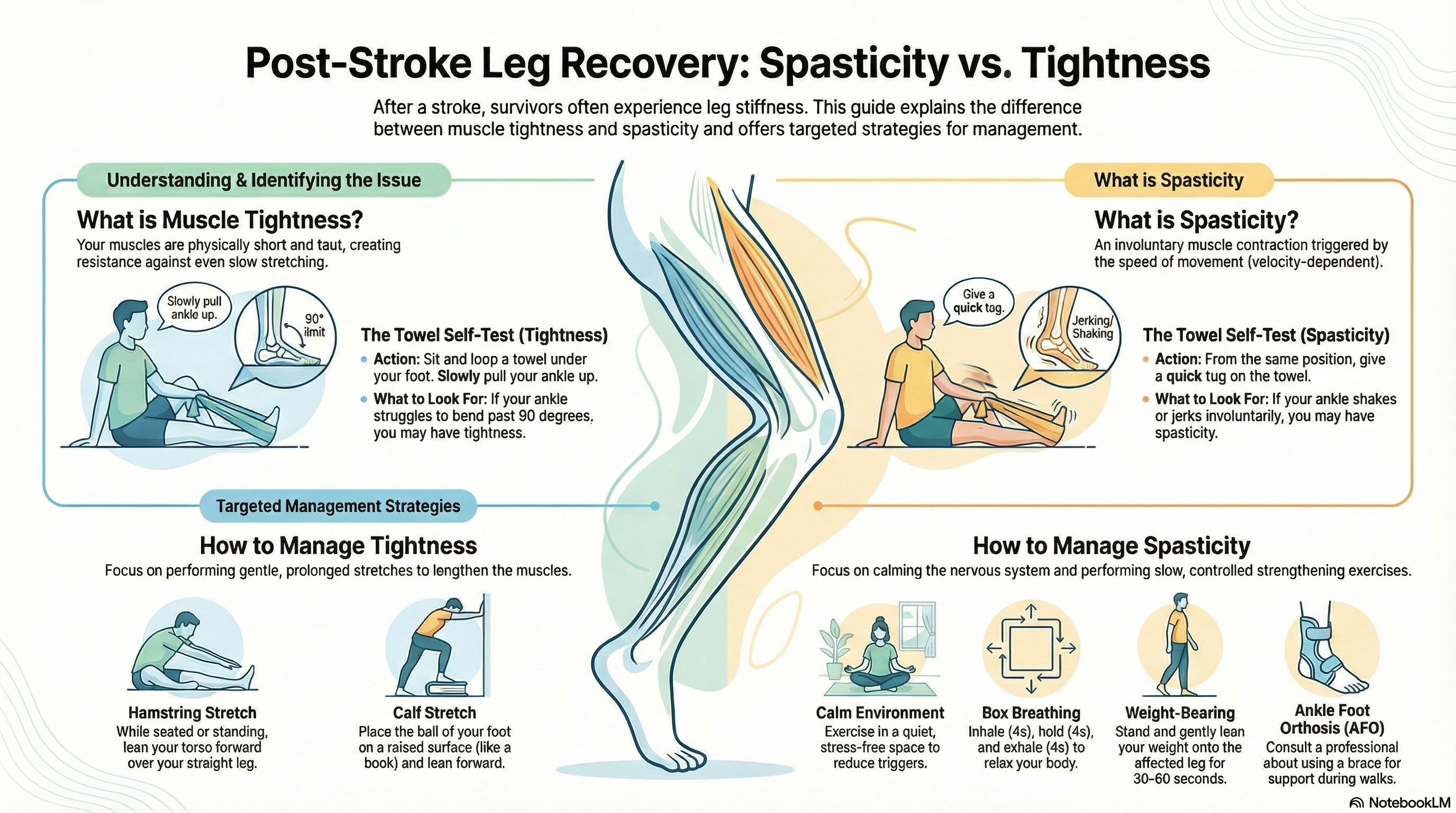
I’ve also included a free infographic in this email to make everything easier to understand and remember.
Tightness vs Spasticity: The Key Difference
Muscle tightness
Comes from muscles being physically shortened
Feels stiff all the time
Usually improves slowly with stretching
Spasticity
Is neurological, not muscular
Caused by an overactive signal from the brain after stroke
Is speed-dependent — the faster you move, the more resistance you feel
Can feel like the muscle suddenly “locks” or pulls
Knowing which one you’re dealing with matters — because the solution changes.
A Simple Self-Test You Can Do at Home
In the video, I demonstrate an easy towel-based self-assessment:
You move the leg slowly and then faster
You pay attention to how the muscle responds
A sudden increase in resistance with speed points toward spasticity
A constant restriction points toward tightness
This helps you decide what your body actually needs, instead of guessing.
What Helps If It’s Spasticity
Spasticity responds best to calm, controlled input, not force.
In the video, I explain strategies such as:
Creating a calm environment before movement
Using box breathing to reduce nervous system overactivity
Gentle weight-bearing exercises to normalise muscle tone
Controlled strengthening with slow, deliberate movement
The goal is to tell your nervous system: you’re safe, you can relax.
What Helps If It’s Tightness
Tightness needs a more mechanical approach.
I demonstrate:
Specific hamstring stretches
Targeted calf stretching
Proper positioning so the stretch goes where it’s meant to
Consistency matters here — small amounts done often work better than aggressive stretching.
Support Tools That May Help
For some people, exercises alone aren’t enough initially.
That’s why I also briefly discuss:
Orthotics or ankle supports to help maintain a neutral leg position
How these supports can reduce strain and make movement practice safer
These tools don’t replace exercise — they support better movement while recovery continues.
Why This Matters for Walking and Balance
Unmanaged spasticity or tightness can affect:
Foot placement
Knee control
Balance confidence
Overall walking safety
When you treat the right problem, progress becomes clearer and less frustrating.
📎 Make sure to check out the free infographic attached — it visually breaks down the differences and management strategies so you can refer back to it anytime.
👉 Watch the full video here to see the self-tests and exercises demonstrated clearly:
You’re not doing it wrong.
You just need the right approach for what your body is experiencing.
With Kindness,
BP
P.S. If you’ve been stretching your leg for months with little change, this distinction alone could explain why. Feel free to share this with someone who’s unsure whether their stiffness is tightness or spasticity.